Last updated: 28. Oktober 2026
What is skin longevity?
Skin longevity is an approach to skincare built for the long term. It accepts that the body's own aging continues and works on the factors you can change: ultraviolet exposure, barrier stress, smoking, sleep, diet and the routine you keep each day. The aim is skin that looks healthy and radiant in every decade of life.
Anti-aging marketing tends to promise that signs of age can be stopped or erased. Skin longevity sets a goal you can meet, because much of what shows on your face comes from exposures you can change. It is also how we describe ourselves: Radiant is a skin-longevity brand combining FDA-cleared at-home beauty devices with clinically studied skincare and supplements. Tools such as our GlowLift™ Infinity face sculpting device build on the basics this page covers first: sunscreen, barrier care and studied actives.
Why does skin age?
Skin ages through two overlapping processes. Intrinsic aging is the built-in clock: collagen production slows, the skin barrier repairs itself more slowly and cells have less energy to spare. Extrinsic aging comes from outside, mainly ultraviolet light, smoking, air pollution, poor sleep and diet. Researchers call the sum of these outside influences the skin aging exposome (Krutmann et al., 2017).
The American Academy of Dermatology puts it this way: "One thing that we cannot change is the natural aging process," yet "we can influence another type of aging that affects our skin" (American Academy of Dermatology).
| Driver | What studies found |
|---|---|
| Collagen loss (intrinsic, faster with sun and menopause) | Skin cells from people over 80 made about a third less type I procollagen than cells from 18- to 29-year-olds in a lab test (Varani et al., 2006) |
| Ultraviolet light (extrinsic) | One UV exposure raised the breakdown of type I collagen by 58% compared with unexposed skin (Fisher et al., 1997) |
| Glycation (intrinsic) | Sugars bind to collagen and form advanced glycation end products (AGEs). Skin collagen has an estimated half-life of 15 years, which gives AGEs decades to build up (Verzijl et al., 2000) |
| Inflammaging (intrinsic) | Chronic, low-level inflammation that comes with age. A 2021 review says its contribution to skin aging "is not well-understood" (Pilkington et al., 2021) |
| Weaker barrier (intrinsic) | 24 hours after barrier disruption, skin of people over 80 had recovered 15%, versus 50% at ages 20 to 30 (Ghadially et al., 1995) |
| Lower cellular energy (intrinsic) | Levels of NAD+, the coenzyme cells use to make energy, fell with age in human skin samples from men and women (Massudi et al., 2012) |
| Air pollution (extrinsic) | In 400 women aged 70 to 80, each measured step up in traffic soot came with about 20% more pigment spots on the face (Vierkötter et al., 2010) |
How much of skin aging can you influence?
You can influence much of the visible, extrinsic side of skin aging, though not the built-in clock. Sunlight, a major outside driver, responds to daily habits. In a 4.5-year randomized trial of 903 adults, people who used sunscreen every day showed no detectable increase in skin aging and 24% less aging than occasional users (Hughes et al., 2013).
The authors concluded that "regular sunscreen use retards skin aging in healthy, middle-aged men and women." Identical twins point the same way: in 186 pairs, the twin who had smoked longer or spent more time in the sun looked older to a review panel (Guyuron et al., 2009). Our guide to whether SPF prevents wrinkles covers the sunscreen trial in depth.
Which daily habits support skin longevity most?
Daily broad-spectrum sunscreen has the strongest evidence for skin longevity, backed by a multi-year randomized trial. Gentle cleansing and a daily moisturizer for the barrier come next, followed by studied actives such as retinoids, vitamin C and niacinamide. Sleep, diet and not smoking matter in observational research. Facial EMS, gua sha and LED light have smaller trials that look promising.
Skin longevity habits, ranked by strength of evidence (our reading of the research)
| Habit | Strength of evidence | Main study |
|---|---|---|
| Broad-spectrum SPF 30 or higher, every day | Strong: randomized trial over 4.5 years | Hughes et al., 2013 |
| Not smoking | Moderate: identical-twin comparison | Guyuron et al., 2009 |
| A retinoid at night | Moderate: vehicle-controlled trials | Kafi et al., 2007 |
| A vitamin C serum | Moderate: systematic review of 7 trials | Correia & Magina, 2023 |
| A niacinamide serum | Moderate: split-face trial run by the ingredient's maker | Bissett et al., 2005 |
| Gentle cleansing and a daily moisturizer | Expert guidance | American Academy of Dermatology |
| 7 to 9 hours of sleep | Early: small comparison study | Oyetakin-White et al., 2015 |
| Vitamin C-rich foods | Early: observational data | Cosgrove et al., 2007 |
| Facial EMS | Early: one randomized trial of a different device | Kavanagh et al., 2012 |
| Red and near-infrared LED light | Early to moderate: controlled trials, small samples | Wunsch & Matuschka, 2014 |
| Gua sha massage | Early: one small randomized trial | Ahn et al., 2025 |
| Oral NAD+ support | Early: trials mostly test precursors; skin effects not established | Freeberg et al., 2023 |
Barrier care
An older barrier is disrupted more easily and recovers more slowly. The AAD advises gentle cleansing, no scrubbing, dropping products that sting or burn and a daily moisturizer, because "moisturizer traps water in our skin, giving it a more youthful appearance." A peptide-rich cream such as our BerryPeptide Plumping Moisturizer covers this step.
Studied actives
Retinol at 0.4% softened fine wrinkles more than a plain lotion over 24 weeks, on the arms of 36 adults with an average age of 87 (Kafi et al., 2007). A review of seven trials found that skin treated with topical vitamin C "appeared smoother and less wrinkled" (Correia & Magina, 2023). In a 12-week split-face trial of 50 women by Procter & Gamble researchers, 5% niacinamide reduced the look of fine lines, spots and sallowness (Bissett et al., 2005).
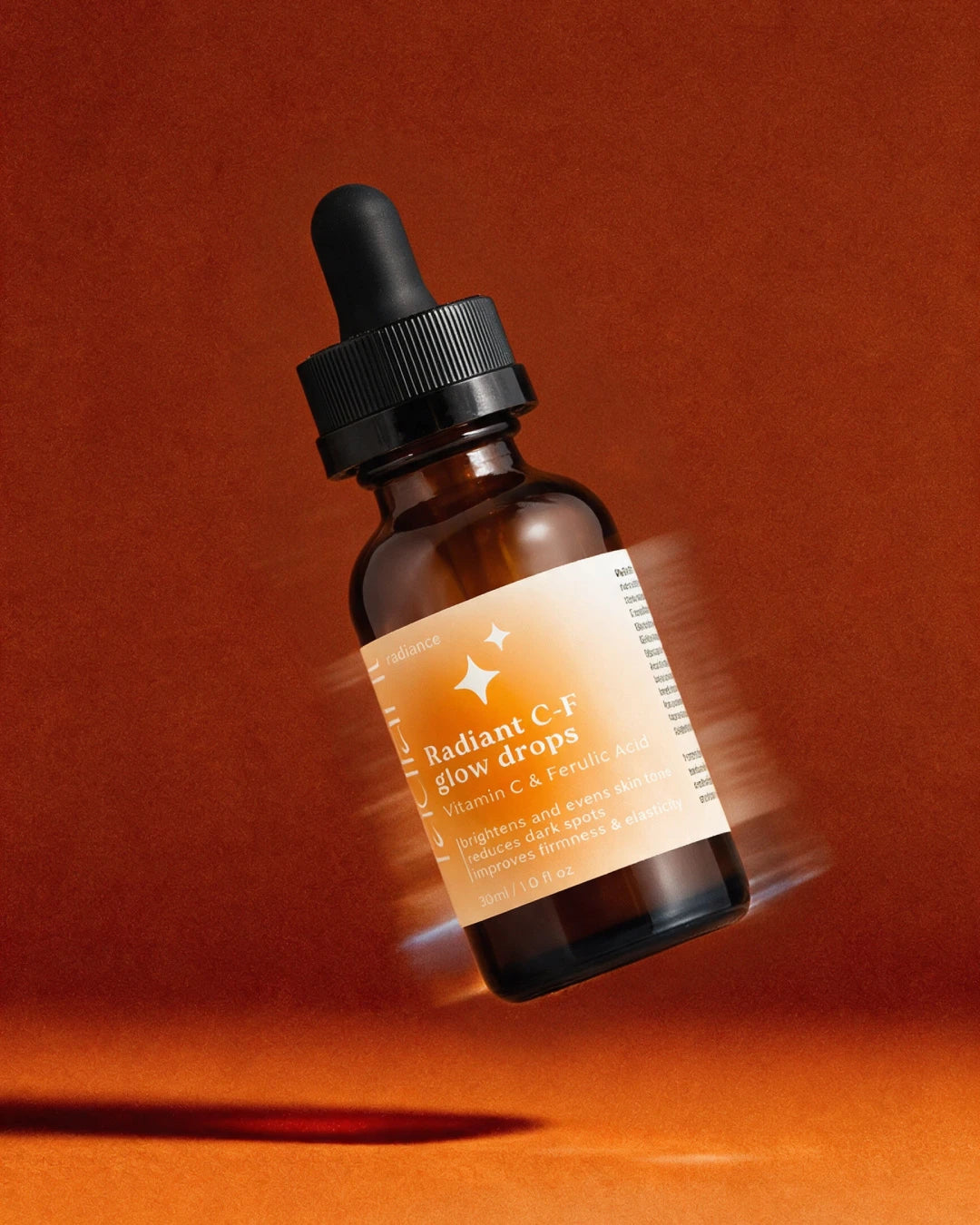
Ingredient studies show what an ingredient can do at a given strength; they are not tests of a finished product. In our range, Radiant C-F Glow Drops vitamin C + ferulic serum suits the morning and Texture Refining Treatment 10% niacinamide serum the evening. Our guide to skin tone and texture covers both.
Sleep and nutrition
In a study of 60 women, good sleepers (7 to 9 hours a night) had lower intrinsic aging scores and 30% better barrier recovery after a tape-stripping test than poor sleepers (Oyetakin-White et al., 2015). In data from 4,025 American women, higher vitamin C intake went with a lower likelihood of a wrinkled appearance (Cosgrove et al., 2007). Both are observational, so they show links and cannot prove cause.
Facial muscle tone and EMS
Skin sits on the facial muscles, and "age-related loss of muscle mass contributes to aging of the human face," as the authors of the main EMS trial put it. EMS (electrical muscle stimulation) uses gentle impulses to make those muscles contract. In that 12-week randomized trial of 108 women (20 minutes a day, five days a week), a main cheek muscle grew 18.6% thicker on ultrasound, while the control group saw no change (Kavanagh et al., 2012). The trial tested a different device in longer sessions, so read it as evidence for the technique, not for any single product.
A 20-week facial exercise pilot without a control group saw estimated age fall from 50.8 to 48.1 years in the 16 women who finished (Alam et al., 2018), and an 8-week randomized trial of gua sha measured contour reductions of 2.2 to 2.4 mm (Ahn et al., 2025). Neither study used a Radiant product. GlowLift™ Infinity uses EMS, a different technology from microcurrent; our guides to EMS vs microcurrent and whether gua sha works explain the difference.
Light therapy (LED)
In a controlled trial of 136 volunteers, 30 sessions of red or red plus near-infrared light improved complexion, roughness and ultrasound-measured collagen density compared with untreated controls (Wunsch & Matuschka, 2014). A review of 31 randomized trials graded LED uses other than acne, herpes infections and acute wound healing C or D, citing small samples and missing sham controls (Jagdeo et al., 2018). Our LumaCloud Pro™ LED light therapy mask is the light step in a Radiant routine, and our guide to whether red light therapy works reviews the evidence.
Cellular energy and NAD+
NAD+ (nicotinamide adenine dinucleotide) is a coenzyme every cell uses to turn food into energy and to run maintenance enzymes, and its decline in aging skin is a measured finding. What taking NAD+ support by mouth does for how skin looks is far less clear. A 2023 review of human trials, most of which tested NAD+ precursors, called the clinical evidence of improved physiological function "unclear" (Freeberg et al., 2023).
What does a daily skin longevity routine look like?
A skin longevity routine is short and repeatable. In the morning, cleanse, apply an antioxidant serum, use a sculpting device if you have one, moisturize and finish with SPF 30 or higher. In the evening, cleanse, add light therapy or a retinoid or niacinamide serum, and moisturize. Doing it most days counts for more than adding extra steps.
- Cleanse gently, morning and evening. Use a mild cleanser and skip scrubs, which the AAD notes can irritate skin.
- Apply a vitamin C serum in the morning. A few drops of Radiant C-F Glow Drops on clean skin.
- Glide with GlowLift™ Infinity for five to seven minutes. Over your serum, use warm mode along the jawline, cheekbones and neck for 2 to 3 minutes, switch straight to cold mode for 1 to 2 minutes under the eyes and over puffy areas, then finish with EMS for 2 to 3 minutes. Glide upward and outward, start on Level 1 and repeat five to seven times a week.
- Moisturize. BerryPeptide Plumping Moisturizer works here.
- Finish with broad-spectrum SPF 30 or higher. Cover your face, neck and the backs of your hands every morning, and reapply when you are outdoors.
- In the evening, add light or an active. On clean, dry skin, wear LumaCloud Pro™ for its 15-minute session with the silicone eye protectors in, five to seven times a week at first and then three to five. Follow with Texture Refining Treatment or your retinoid, then moisturizer.
- Look after the inside. Aim for seven to nine hours of sleep and plenty of fruit and vegetables. Longevity Pro NAD+ Complex is two capsules once a day with water.
Do not use an EMS device if you are pregnant or have a pacemaker, implanted defibrillator or other active electronic implant, or on broken, irritated or infected skin. If you have epilepsy or a diagnosed skin condition, check with your doctor first.
How should skin longevity care change with age?
The foundations of skin longevity stay the same at every age: daily sunscreen, gentle cleansing and a moisturizer. The emphasis shifts. In your 20s and 30s the focus is prevention and a first active. In your 40s and 50s it moves to barrier support, richer textures and muscle tone, and from your 60s to gentleness and comfort.
| Decade | What tends to change | Where to focus | A Radiant step that fits |
|---|---|---|---|
| 20s | Sun exposure adds up long before it shows | Daily SPF, an antioxidant serum, sleep | Radiant C-F Glow Drops; GlowLift™ Infinity as a five-minute habit |
| 30s | First fine lines; texture and tone change | A retinoid or niacinamide at night | Texture Refining Treatment; GlowLift™ Infinity |
| 40s | Perimenopause dryness; a softer-looking jawline | Barrier care, EMS for muscle tone, LED light | BerryPeptide Plumping Moisturizer; GlowLift™ Infinity; LumaCloud Pro™ |
| 50s | Skin collagen may fall "by as much as 30% in the first five years after menopause" (Thornton, 2013) | Richer creams, consistency, from-within support | BerryPeptide Plumping Moisturizer; GlowLift™ Infinity; Longevity Pro NAD+ Complex |
| 60s and beyond | Drier, more fragile-feeling skin | Gentle products that never sting; low device levels | GlowLift™ Infinity on Level 1; BerryPeptide Plumping Moisturizer |
For stage- and area-specific advice, see our guides to how menopause changes your face, forehead wrinkles and tech neck wrinkles.
How do Radiant products fit a skin longevity routine?
Radiant products map onto the levers above. GlowLift™ Infinity is the device step for facial muscle tone and massage, and LumaCloud Pro™ is the light step. Our serums and moisturizer cover actives and barrier care, and Longevity Pro NAD+ Complex and Beyond Collagen Peptides are the from-within steps. Daily sunscreen stays the foundation underneath all of them.
- GlowLift™ Infinity is a 5-in-1 at-home face sculpting device that combines contrast therapy (warm and cold modes), EMS muscle stimulation, LED light, high-frequency vibration and gua sha-inspired sculpting to support firmer-looking, more defined skin. It is FDA-cleared and runs warm, then cold, then EMS.
- LumaCloud Pro™ is an IPX7-waterproof LED light therapy mask that delivers red and near-infrared wavelengths to support a smoother, more radiant-looking complexion at home. It is FDA-cleared and uses four wavelengths (460, 590, 660 and 850 nm).
- Longevity Pro NAD+ Complex is a daily NAD+ supplement (500 mg) formulated to support cellular energy and skin longevity from within.* Each serving also contains quercetin, a flavonoid studied for antioxidant activity (Boots et al., 2008), and resveratrol from Japanese knotweed.
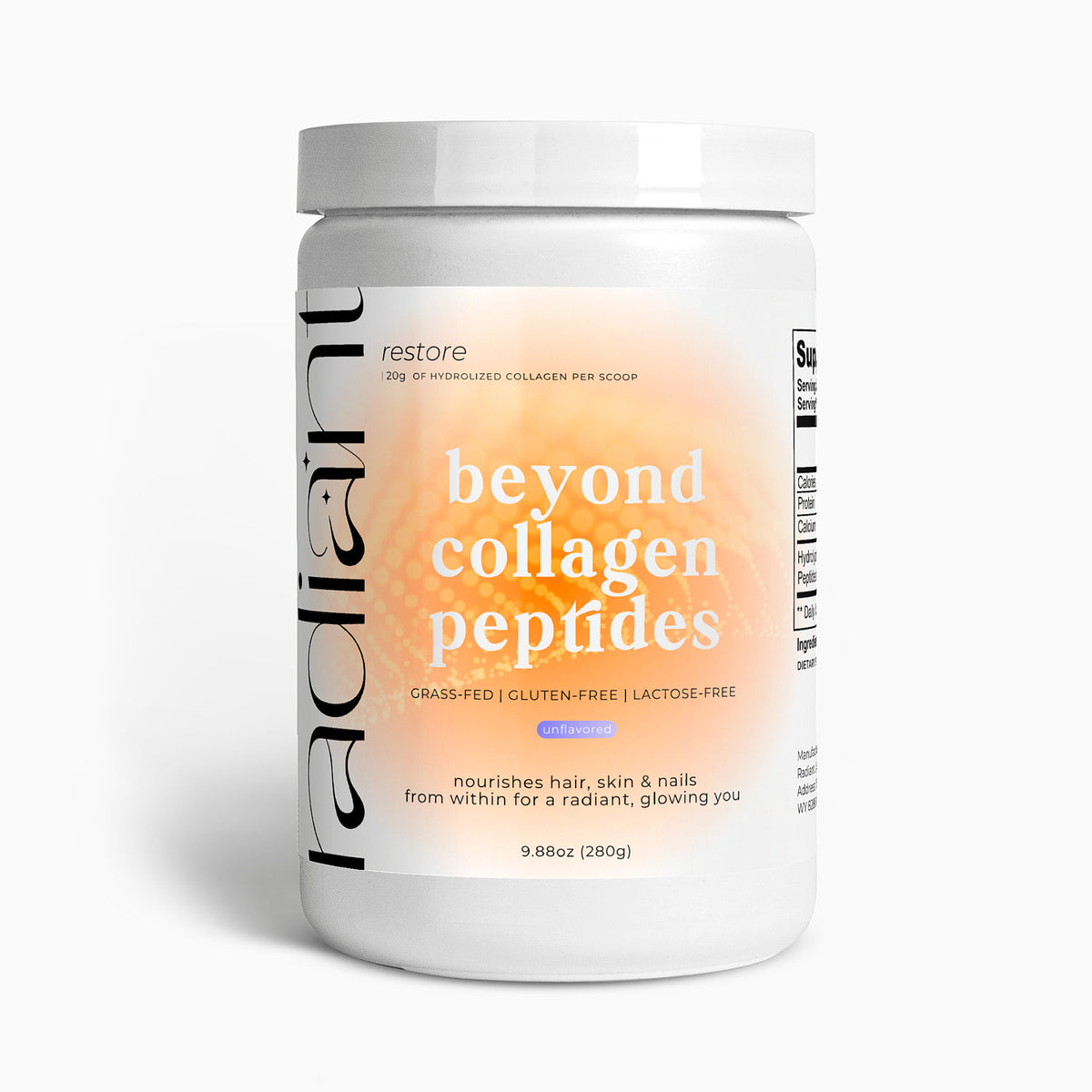
- Beyond Collagen Peptides is an unflavored collagen peptides powder made from grass-fed, hydrolyzed bovine collagen, providing collagen types I and III to support healthy-looking skin, hair and nails from within.* One scoop mixes into water, coffee or a smoothie once a day.
*These statements have not been evaluated by the Food and Drug Administration. These products are not intended to diagnose, treat, cure, or prevent any disease.
What can't at-home skin longevity care do?
At-home skin longevity care supports how skin looks. It cannot stop intrinsic aging, and it does not replace medical care. Deeper sagging usually responds better to in-office treatments. See a board-certified dermatologist about any spot that changes, bleeds or does not heal, and about any sudden or one-sided change in your face or skin.
Our guide to getting rid of jowls at home explains where at-home tools help and where a clinic makes more sense. Talk to your healthcare provider before starting a supplement if you take prescription medication or are pregnant or nursing. If you are unsure which Radiant product suits your routine, ask our team through the contact form.
Where should you start?
Start with the habit that has the most evidence: a broad-spectrum SPF 30 or higher every morning. Add a gentle cleanser and a daily moisturizer, then one active at night. Once those feel automatic, add a five-minute device ritual such as GlowLift™ Infinity for facial muscle tone and massage, and keep the routine going for years.
Sources
- American Academy of Dermatology. 11 ways to reduce premature skin aging. Last updated 2021-02-24. aad.org
- Krutmann J, Bouloc A, Sore G, Bernard BA, Passeron T. The skin aging exposome. J Dermatol Sci. 2017;85(3):152–161. doi:10.1016/j.jdermsci.2016.09.015. PubMed 27720464
- Varani J, Dame MK, Rittie L, et al. Decreased collagen production in chronologically aged skin: roles of age-dependent alteration in fibroblast function and defective mechanical stimulation. Am J Pathol. 2006;168(6):1861–1868. doi:10.2353/ajpath.2006.051302. PubMed 16723701
- Fisher GJ, Wang ZQ, Datta SC, Varani J, Kang S, Voorhees JJ. Pathophysiology of premature skin aging induced by ultraviolet light. N Engl J Med. 1997;337(20):1419–1428. doi:10.1056/NEJM199711133372003. PubMed 9358139
- Verzijl N, DeGroot J, Thorpe SR, et al. Effect of collagen turnover on the accumulation of advanced glycation end products. J Biol Chem. 2000;275(50):39027–39031. doi:10.1074/jbc.M006700200. PubMed 10976109
- Pilkington SM, Bulfone-Paus S, Griffiths CEM, Watson REB. Inflammaging and the skin. J Invest Dermatol. 2021;141(4S):1087–1095. doi:10.1016/j.jid.2020.11.006. PubMed 33358020
- Ghadially R, Brown BE, Sequeira-Martin SM, Feingold KR, Elias PM. The aged epidermal permeability barrier: structural, functional, and lipid biochemical abnormalities in humans and a senescent murine model. J Clin Invest. 1995;95(5):2281–2290. doi:10.1172/JCI117919. PubMed 7738193
- Massudi H, Grant R, Braidy N, Guest J, Farnsworth B, Guillemin GJ. Age-associated changes in oxidative stress and NAD+ metabolism in human tissue. PLoS One. 2012;7(7):e42357. doi:10.1371/journal.pone.0042357. PubMed 22848760
- Vierkötter A, Schikowski T, Ranft U, et al. Airborne particle exposure and extrinsic skin aging. J Invest Dermatol. 2010;130(12):2719–2726. doi:10.1038/jid.2010.204. PubMed 20664556
- Hughes MCB, Williams GM, Baker P, Green AC. Sunscreen and prevention of skin aging: a randomized trial. Ann Intern Med. 2013;158(11):781–790. doi:10.7326/0003-4819-158-11-201306040-00002. PubMed 23732711
- Guyuron B, Rowe DJ, Weinfeld AB, Eshraghi Y, Fathi A, Iamphongsai S. Factors contributing to the facial aging of identical twins. Plast Reconstr Surg. 2009;123(4):1321–1331. doi:10.1097/PRS.0b013e31819c4d42. PubMed 19337100
- Kafi R, Kwak HSR, Schumacher WE, et al. Improvement of naturally aged skin with vitamin A (retinol). Arch Dermatol. 2007;143(5):606–612. doi:10.1001/archderm.143.5.606. PubMed 17515510
- Correia G, Magina S. Efficacy of topical vitamin C in melasma and photoaging: a systematic review. J Cosmet Dermatol. 2023;22(7):1938–1945. doi:10.1111/jocd.15748. PubMed 37128827
- Bissett DL, Oblong JE, Berge CA. Niacinamide: a B vitamin that improves aging facial skin appearance. Dermatol Surg. 2005;31(7 Pt 2):860–865. doi:10.1111/j.1524-4725.2005.31732. PubMed 16029679
- Oyetakin-White P, Suggs A, Koo B, et al. Does poor sleep quality affect skin ageing? Clin Exp Dermatol. 2015;40(1):17–22. doi:10.1111/ced.12455. PubMed 25266053
- Cosgrove MC, Franco OH, Granger SP, Murray PG, Mayes AE. Dietary nutrient intakes and skin-aging appearance among middle-aged American women. Am J Clin Nutr. 2007;86(4):1225–1231. doi:10.1093/ajcn/86.4.1225. PubMed 17921406
- Kavanagh S, Newell J, Hennessy M, Sadick N. Use of a neuromuscular electrical stimulation device for facial muscle toning: a randomized, controlled trial. J Cosmet Dermatol. 2012;11(4):261–266. doi:10.1111/jocd.12007. PubMed 23174048
- Alam M, Walter AJ, Geisler A, et al. Association of facial exercise with the appearance of aging. JAMA Dermatol. 2018;154(3):365–367. doi:10.1001/jamadermatol.2017.5142. PubMed 29299598
- Ahn SH, Hwang UJ, Han HS, et al. Comparative effects of facial roller and gua sha massage on facial contour, muscle tone, and skin elasticity: randomized controlled trial. J Cosmet Dermatol. 2025;24(6):e70236. doi:10.1111/jocd.70236. PubMed 40439289
- Wunsch A, Matuschka K. A controlled trial to determine the efficacy of red and near-infrared light treatment in patient satisfaction, reduction of fine lines, wrinkles, skin roughness, and intradermal collagen density increase. Photomed Laser Surg. 2014;32(2):93–100. doi:10.1089/pho.2013.3616. PubMed 24286286
- Jagdeo J, Austin E, Mamalis A, Wong C, Ho D, Siegel DM. Light-emitting diodes in dermatology: a systematic review of randomized controlled trials. Lasers Surg Med. 2018;50(6):613–628. doi:10.1002/lsm.22791. PubMed 29356026
- Freeberg KA, Udovich CC, Martens CR, Seals DR, Craighead DH. Dietary supplementation with NAD+-boosting compounds in humans: current knowledge and future directions. J Gerontol A Biol Sci Med Sci. 2023;78(12):2435–2448. doi:10.1093/gerona/glad106. PubMed 37068054
- Thornton MJ. Estrogens and aging skin. Dermatoendocrinol. 2013;5(2):264–270. doi:10.4161/derm.23872. PubMed 24194966
- Boots AW, Haenen GRMM, Bast A. Health effects of quercetin: from antioxidant to nutraceutical. Eur J Pharmacol. 2008;585(2-3):325–337. doi:10.1016/j.ejphar.2008.03.008. PubMed 18417116