Last updated: October 28, 2026
Most of what is known about contrast therapy comes from sports science, and much less from skin research. We make a contrast-therapy gua sha device, our GlowLift™ Infinity face sculpting device, so on this page we mark which findings come from which field and where the evidence stops.
How does contrast therapy work?
Contrast therapy works by making the small blood vessels in your skin widen and then narrow. Heat relaxes the vessel walls and brings more blood to the surface, which is why warm skin flushes. Cold does the opposite and moves blood away from the surface. Switching between the two makes skin blood flow rise and fall in waves.
Physiologists call these responses vasodilation and vasoconstriction. A review in the Journal of Applied Physiology notes that local changes in skin temperature "are capable of maximally vasoconstricting or vasodilating the skin" (Johnson and Kellogg, 2010).
Researchers have measured the switch directly. In a crossover study of 24 healthy men, warm water at 40 °C changed lower-leg blood flow significantly, cold water at 13 °C did not lower it significantly, and alternating the two made blood flow rise and fall for the whole 20-minute session (Fiscus et al., 2005). That was a leg in a water bath, so treat it as evidence for the mechanism only.
What are the main types of contrast therapy?
The main types of contrast therapy are whole-body and local. Whole-body contrast therapy usually means a sauna or hot bath followed by a cold plunge or cold shower. Contrast water therapy, popular with athletes, moves a limb or the whole body between hot and cold tubs. Facial contrast therapy applies the same switch to the face alone.
What does the research say about contrast therapy benefits?
Most contrast therapy research comes from sports recovery. A 2013 meta-analysis of 18 trials found that alternating hot and cold water eased muscle soreness and strength loss more than resting, yet contrast water rarely beat other methods such as cold water alone. Skin trials are scarce, so the case for skin rests on how heat and cold change blood flow.
| Study | What was tested | What it found | Limits |
|---|---|---|---|
| Bieuzen et al., 2013 | Meta-analysis, 18 trials of contrast water after muscle-damaging exercise | Less soreness and strength loss than passive rest up to 96 hours; little difference from other methods | All trials at high risk of bias |
| Higgins et al., 2017 | Meta-analysis, 23 studies, 606 team-sport athletes | Contrast water helped perceived fatigue, not perceived soreness or neuromuscular recovery | Team sport only |
| Moore et al., 2023 | Meta-analysis, 28 studies comparing cold-water immersion with other methods | Cold water alone beat contrast water for most recovery outcomes | Active adults after hard exercise |
| Chen et al., 2024 | Network meta-analysis, 57 studies, 1,220 people | Contrast water ranked first for lowering creatine kinase, a muscle-damage marker; cryotherapy ranked first for soreness | Rankings, partly from indirect comparisons |
| Kowatzki et al., 2008 | Skin measurements, 41 adults, regular sauna users vs non-users | More stable skin barrier and better-hydrated outer skin in sauna users | Small, not randomized, heat only |
Cold on its own has a similar record. A 2022 review of 104 cold-water immersion studies found most used small groups at varying water temperatures, and concluded that "without further conclusive studies, the topic will continue to be a subject of debate" (Espeland et al., 2022).
What the studies did not test
We found no published trial of a warm-then-cold routine on facial skin. The recovery studies measured muscles, and none looked at firmness, puffiness or glow. Whether a cold finish helps a serum stay in the skin has not been measured either. The physiology does carry over to the face: heat widens skin vessels and cold narrows them.
What does heat do for your skin?
Heat brings more blood into the skin, which gives the warm flush and a rosier look while it lasts. Warm skin also lets more of a product through: a review found substantial evidence that higher temperature can increase how much of a medicated cream or patch enters the skin. Too much heat, too often, has downsides.
That review was co-written by scientists at the U.S. Food and Drug Administration (Hao et al., 2016). It covered medicines, not serums, so it explains why warming skin before a serum makes sense without proving any one serum absorbs better. Regular heat may also suit the skin barrier: in the sauna study in the table above, regular users had better-hydrated outer skin.
A review of heat and infrared research explains the downside: heat can break down parts of the skin's support network by switching on enzymes called matrix metalloproteinases, adding to premature skin aging (Cho et al., 2009). For the face, keep warmth gentle and limited to a couple of minutes.
What does cold do for your skin?
Cold narrows the small blood vessels near the surface, which makes skin look calmer and less flushed and leaves it feeling tighter for a while. That is refreshing, and it suits a puffy morning. The evidence that cold alone drains fluid from puffy tissue is weak, so pair it with gentle outward massage.
In a lab study of 17 healthy adults, a 0 °C stimulus held on the forehead for 60 seconds lowered skin blood flow and heart rate and raised blood pressure (Brown et al., 2003). Swelling is another matter. A meta-analysis of six randomized trials after wisdom-tooth surgery found no evidence that cold reduced facial swelling, and graded the evidence as low quality (do Nascimento-Júnior et al., 2019).
Use cold for the refreshed look and light strokes toward the ears and down the neck to move fluid. Our guide on how to depuff your face maps those strokes.
How do you do contrast therapy on your face at home?
To do contrast therapy on your face at home, warm the skin for one to two minutes with a warm (not hot) towel or tool, then cool it for about a minute with cool water, a wrapped ice cube or a chilled roller. Finish on cold, keep both temperatures comfortable and move outward and upward.
- Cleanse. Start with clean skin and clean hands or tools.
- Warm (1–2 minutes). Hold a towel wrung out in warm water against your face. Test it on your inner wrist first: it should feel comfortably warm, never hot.
- Apply your serum. Press it in while the skin is still warm.
- Cool (about 1 minute). Glide a chilled roller or cool gua sha stone from the center of your face toward the ears, or splash with cool water. Wrap any ice in a thin cloth and keep it moving.
- Moisturize. Add sunscreen in the daytime.
Massage adds its own effect: in 12 people, five minutes of roller massage on one cheek raised its skin blood flow for at least 10 minutes (Miyaji et al., 2018; one co-author worked for a roller maker). Our gua sha routine gives the full stroke map, and our guide to whether gua sha works covers the research.
How does GlowLift™ Infinity do contrast therapy?
GlowLift™ Infinity does contrast therapy with a warm mode (43 °C / 109 °F) and a cold mode (10 °C / 50 °F) in one cordless device with a sculpted stainless-steel gua sha edge. Warm mode comes first, cold mode follows straight after, and EMS finishes the session. A full session takes five to seven minutes, and you can use it five to seven times a week.
GlowLift™ Infinity is a 5-in-1 at-home face sculpting device that combines contrast therapy (warm and cold modes), EMS muscle stimulation, LED light, high-frequency vibration and gua sha-inspired sculpting to support firmer-looking, more defined skin. It is FDA-cleared. Warm mode opens up the skin and boosts blood flow, so the serum you glide over spreads easily and can absorb better. Cold mode follows with a cold shock designed to lock in your actives, leaving skin looking de-puffed and tighter. The gua sha edge and high-frequency vibration give a lymphatic-drainage-style massage that sweeps excess fluid toward the lymph nodes. EMS (electrical muscle stimulation) then engages the facial muscles (see EMS vs microcurrent).
- Cleanse and dry your skin.
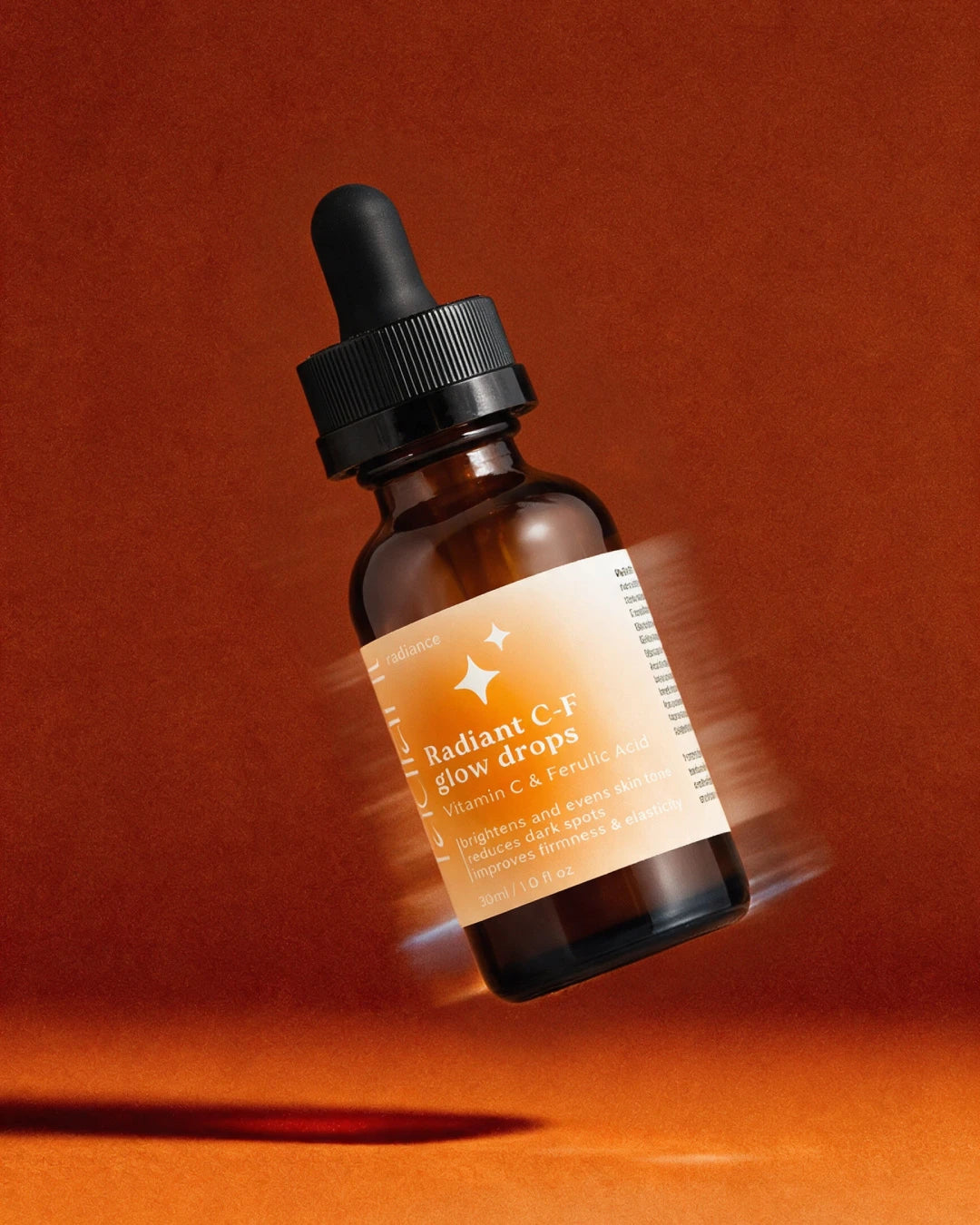
- Apply serum, facial oil or cream. We pair it most often with Radiant C-F Glow Drops, our vitamin C and ferulic serum.
- Warm mode (2–3 minutes). Start on Level 1 and glide upward along the jawline, cheekbones and neck. Our jowls and tech neck wrinkles guides show the strokes.
- Cold mode (1–2 minutes). Switch straight to cold and sweep outward under the eyes and over puffiness-prone areas.
- EMS (2–3 minutes). Finish with EMS, or vibration if you prefer, following your contours upward and outward.
- Wipe the head clean with a slightly damp cloth. Never submerge the device.
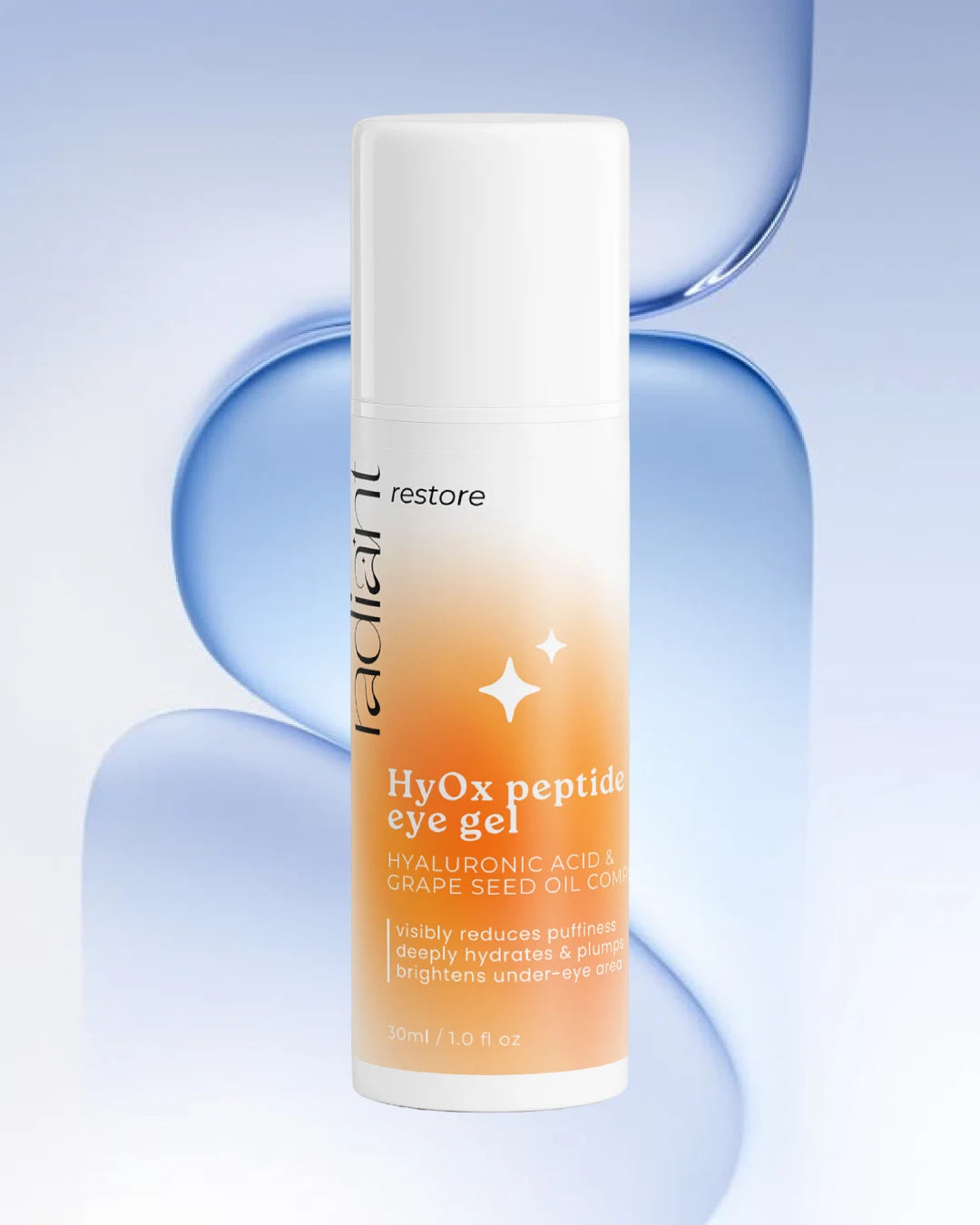
Cold mode always follows warm mode; that switch is the contrast therapy. On its own, cold mode is for the under-eye area, for example over HyOx Peptide Eye Gel, our depuffing peptide eye gel. The studies on this page tested heat, cold and massage, not GlowLift™ Infinity, so read them as evidence for the technique, not for any single product.
Do not use an EMS device if you are pregnant or have a pacemaker, implanted defibrillator or other active electronic implant, or on broken, irritated or infected skin. If you have epilepsy or a diagnosed skin condition, check with your doctor first.
Which facial contrast method should you choose?
Choose a facial contrast method by how much control and time you want. A warm towel and cool water cost nothing but drift toward room temperature quickly. Ice and chilled rollers give strong cold but need freezer time and care on thin skin. A device holds set temperatures and adds massage, at a higher upfront cost.
| Method | Warm step | Cold step | Temperature control | Massage | Best for |
|---|---|---|---|---|---|
| Towel + cool water | Warm, damp towel | Cool splash | Low: the towel cools fast | Fingers only | Trying it for free |
| Compress + ice roller or globes | Warm compress | Chilled roller or globes | Medium: the roller warms on skin | Rolling | Puffy mornings on a budget |
| Ice cube facial | None unless paired | Wrapped ice | Low: very cold, then melts | None | A quick cool-down |
| Heated and chilled gua sha stones | Stone warmed in water | Stone from the fridge | Low to medium | Gua sha strokes | Gua sha fans |
| GlowLift™ Infinity | Warm mode, 43 °C (109 °F) | Cold mode, 10 °C (50 °F), right after warm | High: set modes, 3 intensity levels each | Gua sha edge, vibration, EMS | A daily 5–7 minute routine with serum |
Who should skip contrast therapy or be careful?
Skip contrast therapy, or check with your doctor first, if you have rosacea, visible broken capillaries, cold urticaria, Raynaud's phenomenon, broken or very sensitive skin, or a recent cosmetic procedure. Heat or cold can set off flare-ups in some of these conditions. Cold also briefly raises blood pressure, which matters for whole-body plunges.
- Rosacea: ask your dermatologist first. The American Academy of Dermatology lists heat, and wind and cold, among common rosacea triggers (AAD).
- Broken capillaries: keep temperatures mild and passes short, since contrast therapy makes these small vessels widen and narrow.
- Cold urticaria: hives or swelling appear after cold, usually as the skin rewarms, and severe reactions such as anaphylaxis can occur (Maltseva et al., 2021). Avoid cold therapy.
- Raynaud's phenomenon: blood vessels in the extremities narrow, usually after cold or emotional stress, and rarely the nose or ears are affected (NIAMS, 2024). Skip the cold step and ask your doctor.
- Irritated or very sensitive skin: wait until it settles, and stop if redness or stinging lingers.
- Recent laser, peel, microneedling, injectables or surgery: wait until your clinician says heat, cold and massage are fine.
- Saunas and cold plunges: ask your doctor first if you have a heart or blood-pressure condition or are pregnant.
This page covers cosmetic care for how skin looks and feels, not treatment for any condition. Questions about using GlowLift™ with your skin? Reach us through our contact form.
Is contrast therapy worth adding to your routine?
Contrast therapy is worth adding if you want a fresher, de-puffed look and a routine you enjoy, and you accept that skin-specific trials are still missing. A towel and cool water cost nothing to try. A device keeps the temperatures consistent, adds massage and EMS, and fits the whole routine into five to seven minutes.
At Radiant we see this as skin longevity: small daily habits that add up. For glow, our guide on how to get glass skin shows where a warm-then-cold pass fits between serum and moisturizer.
Sources
- Johnson JM, Kellogg DL. Local thermal control of the human cutaneous circulation. J Appl Physiol. 2010;109(4):1229–1238. PubMed 20522732 · doi:10.1152/japplphysiol.00407.2010
- Fiscus KA, Kaminski TW, Powers ME. Changes in lower-leg blood flow during warm-, cold-, and contrast-water therapy. Arch Phys Med Rehabil. 2005;86(7):1404–1410. PubMed 16003672 · doi:10.1016/j.apmr.2004.11.046
- Bieuzen F, Bleakley CM, Costello JT. Contrast water therapy and exercise induced muscle damage: a systematic review and meta-analysis. PLoS One. 2013;8(4):e62356. PubMed 23626806 · doi:10.1371/journal.pone.0062356
- Higgins TR, Greene DA, Baker MK. Effects of cold water immersion and contrast water therapy for recovery from team sport: a systematic review and meta-analysis. J Strength Cond Res. 2017;31(5):1443–1460. PubMed 27398915 · doi:10.1519/JSC.0000000000001559
- Moore E, Fuller JT, Bellenger CR, et al. Effects of cold-water immersion compared with other recovery modalities on athletic performance following acute strenuous exercise in physically active participants: a systematic review, meta-analysis, and meta-regression. Sports Med. 2023;53(3):687–705. PubMed 36527593 · doi:10.1007/s40279-022-01800-1
- Chen R, Ma X, Ma X, Cui C. The effects of hydrotherapy and cryotherapy on recovery from acute post-exercise induced muscle damage: a network meta-analysis. BMC Musculoskelet Disord. 2024;25(1):749. PubMed 39294614 · doi:10.1186/s12891-024-07315-2
- Espeland D, de Weerd L, Mercer JB. Health effects of voluntary exposure to cold water: a continuing subject of debate. Int J Circumpolar Health. 2022;81(1):2111789. PubMed 36137565 · doi:10.1080/22423982.2022.2111789
- Hao J, Ghosh P, Li SK, Newman B, Kasting GB, Raney SG. Heat effects on drug delivery across human skin. Expert Opin Drug Deliv. 2016;13(5):755–768. PubMed 26808472 · doi:10.1517/17425247.2016.1136286
- Kowatzki D, Macholdt C, Krull K, et al. Effect of regular sauna on epidermal barrier function and stratum corneum water-holding capacity in vivo in humans: a controlled study. Dermatology. 2008;217(2):173–180. PubMed 18525205 · doi:10.1159/000137283
- Cho S, Shin MH, Kim YK, et al. Effects of infrared radiation and heat on human skin aging in vivo. J Investig Dermatol Symp Proc. 2009;14(1):15–19. PubMed 19675547 · doi:10.1038/jidsymp.2009.7
- Brown CM, Sanya EO, Hilz MJ. Effect of cold face stimulation on cerebral blood flow in humans. Brain Res Bull. 2003;61(1):81–86. PubMed 12788210 · doi:10.1016/s0361-9230(03)00065-0
- do Nascimento-Júnior EM, Dos Santos GMS, Tavares Mendes ML, et al. Cryotherapy in reducing pain, trismus, and facial swelling after third-molar surgery: systematic review and meta-analysis of randomized clinical trials. J Am Dent Assoc. 2019;150(4):269–277.e1. PubMed 30798949 · doi:10.1016/j.adaj.2018.11.008
- Miyaji A, Sugimori K, Hayashi N. Short- and long-term effects of using a facial massage roller on facial skin blood flow and vascular reactivity. Complement Ther Med. 2018;41:271–276. PubMed 30477852 · doi:10.1016/j.ctim.2018.09.009
- American Academy of Dermatology. Triggers could be causing your rosacea flare-ups. Accessed 2026-10-28. aad.org
- Maltseva N, Borzova E, Fomina D, et al. Cold urticaria: what we know and what we do not know. Allergy. 2021;76(4):1077–1094. PubMed 33249577 · doi:10.1111/all.14674
- National Institute of Arthritis and Musculoskeletal and Skin Diseases. Raynaud's phenomenon. Last reviewed July 2024. niams.nih.gov